WA Police reveals 326 high risk offenders but not how many suburbs they live in
WA Police has disclosed that hundreds of dangerous and high risk sexual offenders are included in its public local search system, but it has not revealed how many Western Australian suburbs are affected.
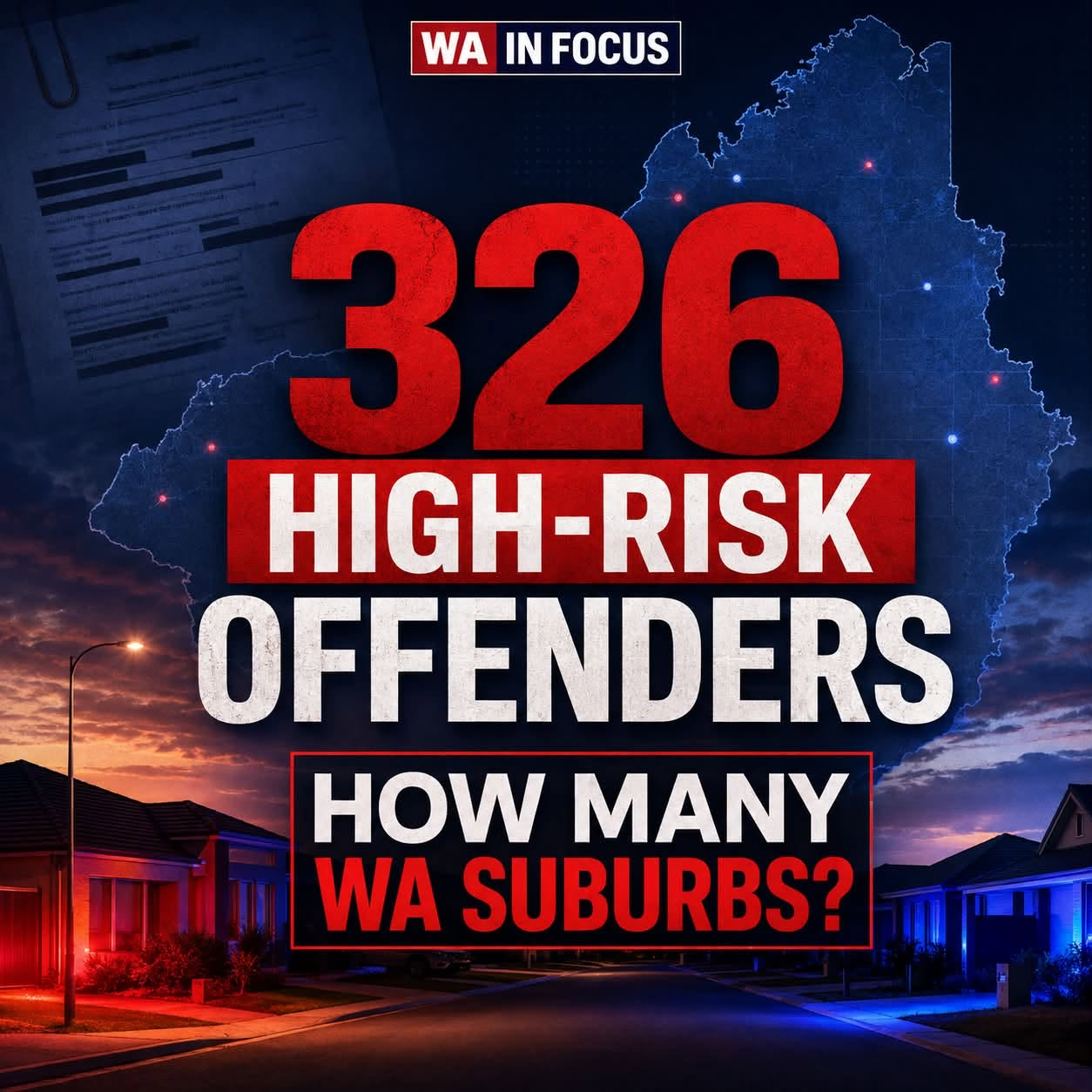
WA Police has disclosed that hundreds of dangerous and high risk sexual offenders are included in its public local search system, but it has not revealed how many Western Australian suburbs are affected.
The Community Protection WA website allows members of the public to search their suburb and surrounding areas for certain offenders who meet the legal threshold for publication.
A parliamentary answer shows 326 offenders were included in the local search system as at 1 September 2024. Police said the information was updated weekly, but did not state how many suburbs or regional localities those offenders were spread across.
Later figures provided to Parliament showed there were 3,607 reportable offenders in Western Australia as at 31 May 2025. Of those, 1,971 were being managed by the Serious Offender Enforcement Squad in metropolitan Perth, 936 were managed by regional police officers and 700 were in custody.
Those figures cover the wider reportable offender population. Not every reportable offender appears in the public local search system, which is limited to particular dangerous and high risk offenders who meet legislative requirements.
Despite the local search scheme being based on where offenders live, WA Police does not publish a statewide figure showing how many suburbs return a result.
Police have previously refused to release more detailed geographical information.
In 2010, the government was asked through Parliament to provide the number of reportable offenders in each policing district and identify the ten suburbs or areas with the highest numbers.
The request was refused. The government said section 82 of the Community Protection (Offender Reporting) Act prevented the release of information that could directly or indirectly identify a person on the register.
There are real and fair reasons for protecting individual identities, exact addresses, victims and children connected to an offender. However, it is unclear why Police could not publish a single statewide total showing the number of affected suburbs without naming those suburbs or identifying anyone.
WA in Focus reviewed relevant parliamentary questions recorded during 2026. Questions have been asked about the supervision of individual offenders, post sentence supervision orders and the management of reportable offenders. None asked or answered how many WA suburbs currently contain offenders included in the local search scheme.
The most recent WA Government information, updated in May 2026, continues to tell residents that the local search service provides photographs of dangerous and high risk offenders living in their suburb or surrounding suburbs. It does not disclose how many communities across the state are covered by the scheme.
The missing figure would help the public understand whether listed offenders are concentrated in a relatively small number of locations or spread across a large part of metropolitan and regional Western Australia.
This raises a broader question about whether WA's limited search system provides the public with enough information.
SHOULD WESTERN AUSTRALIA INTRODUCE A BROADER PUBLIC OFFENDER REGISTER?
Such a register could provide clearer information about offenders who have already met the legal threshold for public disclosure, while maintaining strict protections for victims, children and private residential addresses.
Supporters may argue that people should be able to make informed decisions about safety in their communities. Others may warn that wider publication could lead to harassment, vigilantism or unintended consequences for victims and offenders' families.
Got a story for us?
Send a tip or join the conversation in the WA in Focus Facebook group.